Monobond Etch and Prime streamlines ceramic restoration bonding, offering a single-step solution to replace traditional etching and silane application.
This innovative primer minimizes hazardous hydrofluoric acid use, enhancing safety and simplifying the restorative process for dental professionals.
What is Monobond Etch and Prime?
Monobond Etch and Prime, manufactured by Ivoclar Vivadent, represents a significant advancement in ceramic surface treatment for adhesive bonding procedures. It’s a single-component, light-curing primer designed to both etch and silanate glass-ceramic restorations in a remarkably efficient, one-step process.
Traditionally, dentists utilized separate steps involving hydrofluoric acid etching followed by a silane coupling agent application. Monobond Etch and Prime consolidates these into a single application, reducing technique sensitivity and chair-side time. This formulation addresses concerns surrounding the toxicity associated with hydrofluoric acid, offering a safer alternative while maintaining robust bond strength. It’s categorized as a Small Quantity Hazard during shipping, requiring proper identification but avoiding extra HAZMAT fees.
The Need for Ceramic Primers
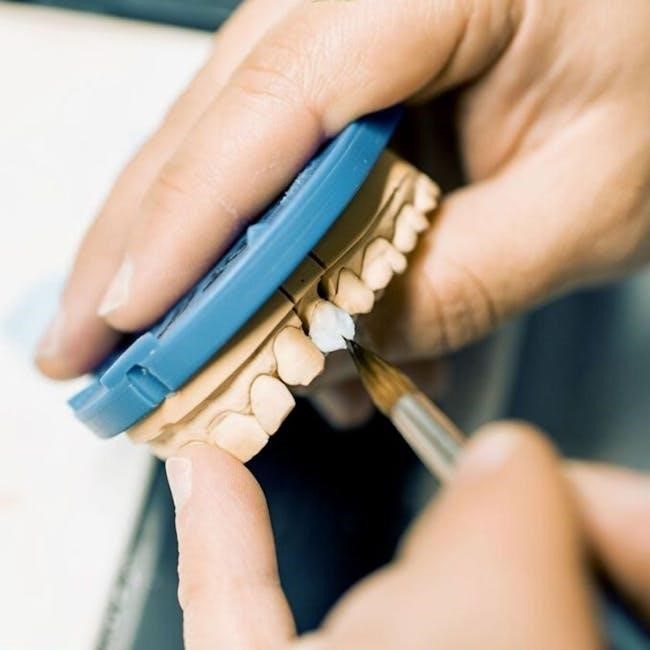
Ceramic restorations, while aesthetically pleasing and durable, possess a low surface energy, hindering direct bonding with resin cements. This necessitates surface treatment to create a reliable and lasting adhesive interface. Traditional methods relied on hydrofluoric acid etching to microscopically roughen the ceramic surface, increasing its surface area and creating silanol groups.
However, the inherent dangers of hydrofluoric acid – its corrosive nature and potential for systemic toxicity – prompted the development of alternative solutions. Ceramic primers, like Monobond Etch and Prime, address this need by simultaneously etching and applying a silane coupling agent, fostering a strong chemical bond between the ceramic and the resin cement. This simplifies the process and enhances safety for dental practitioners.
Understanding the Components
Monobond Etch and Prime uniquely combines hydrofluoric acid etching and a silane coupling agent into a single, convenient application for optimal bonding.
Hydrofluoric Acid Etching: Traditional Method
Historically, achieving reliable bonding to glass-ceramics necessitated a two-step process. This involved initially etching the ceramic surface with hydrofluoric acid (HF) to create microscopic porosity. This etching step is crucial for mechanical interlocking with subsequent bonding agents.
Following HF etching, a silane coupling agent was applied. Silane acts as a bridge, chemically bonding the inorganic ceramic to the organic resin cement. However, hydrofluoric acid presents significant safety concerns due to its highly corrosive and toxic nature.
Precise handling protocols and appropriate personal protective equipment are essential when utilizing HF, making the traditional method less desirable compared to newer, simplified alternatives like Monobond Etch and Prime.
Silane Coupling Agents: The Bonding Link
Silane coupling agents are pivotal in dental adhesion, functioning as a molecular bridge between inorganic ceramic surfaces and organic resin-based materials. These agents possess two distinct functionalities: one reacting with the silanol groups on the etched ceramic, and the other copolymerizing with the resin matrix.
This dual reactivity creates a robust and durable bond, essential for the longevity of ceramic restorations. Traditionally, silanes were applied after hydrofluoric acid etching. However, the process requires meticulous technique to avoid contamination and ensure optimal bond strength.
Monobond Etch and Prime integrates this silane technology into a single-step application, simplifying the bonding procedure while maintaining excellent adhesion properties;
Monobond Etch and Prime: A Single-Step Solution
Monobond Etch and Prime represents a significant advancement in ceramic adhesion, consolidating the etching and silanization steps into a single, convenient application. This eliminates the need for separate bottles and reduces the risk of contamination or procedural errors inherent in multi-step systems.
By combining hydrofluoric acid etching with a silane coupling agent in one formulation, it streamlines the workflow, saving valuable chairside time. This single-component primer is designed for use with glass-ceramic restorations, offering a simplified yet effective bonding protocol.
Its formulation addresses the unpopularity of handling toxic hydrofluoric acid, offering a safer alternative.

Instructions for Use: Step-by-Step Guide
Proper application involves surface preparation, followed by Monobond Etch and Prime application, and finally, resin cement bonding for optimal adhesion and restoration longevity.
Surface Preparation
Prior to Monobond Etch and Prime application, meticulous surface preparation is crucial for achieving a robust and durable bond. Begin by thoroughly cleaning the ceramic restoration to remove any contaminants, such as dust, debris, or residual cement. This can be accomplished using alcohol or a dedicated cleaning solution specifically designed for dental ceramics.
Following cleaning, ensure the surface is completely dry. Avoid recontamination during handling. While Monobond Etch and Prime eliminates the need for traditional hydrofluoric acid etching in many cases, understanding the material being bonded is key. For optimal results, particularly with certain glass ceramics, a brief etching step may be considered, followed by thorough rinsing and drying before primer application. This ensures maximum surface energy and promotes superior bonding performance with resin cement.
Application of Monobond Etch and Prime
To apply Monobond Etch and Prime, dispense a thin, uniform layer onto the prepared ceramic surface. Avoid pooling or excessive application, as this can compromise the bond. Utilize the provided applicator brush to ensure complete coverage of the bonding area. Gently rub the primer onto the surface for approximately 20 seconds, facilitating optimal wetting and chemical interaction with the ceramic.
Do not light-cure at this stage! Allow the primer to dwell for a minimum of 60 seconds, but no more than five minutes, to enable the silane coupling agents to effectively bond with the ceramic substrate. This dwell time is critical for establishing a strong and lasting connection before proceeding to the resin cementation phase.
Bonding Procedure with Resin Cement
Following Monobond Etch and Prime application, immediately proceed with resin cementation – Multilink-N is recommended. Apply the resin cement according to the manufacturer’s instructions, ensuring complete coverage of the prepared ceramic surface and the tooth structure. Avoid any contamination during cementation, as this can significantly reduce bond strength.
Light-cure the resin cement according to the specified parameters (wavelength and duration) for optimal polymerization. Remove any excess cement after curing, and perform a final polish to achieve a smooth and esthetic restoration. Proper execution of this bonding procedure, following the primer application, is vital for long-term clinical success.

Materials and Compatibility
Monobond Etch and Prime demonstrates excellent compatibility with popular glass ceramics like IPS e.max CAD, Vita Mark II, and Vita Enamic, alongside Multilink-N cement.
Compatible Ceramic Materials (IPS e.max CAD, Vita Mark II, Vita Enamic)
Monobond Etch and Prime exhibits robust performance across a diverse range of glass-ceramic materials commonly utilized in modern restorative dentistry. Specifically, it’s highly compatible with IPS e.max CAD, renowned for its exceptional aesthetics and strength, ensuring a reliable bond for crowns and veneers.
Furthermore, the primer effectively conditions Vita Mark II, a feldspathic ceramic favored for its lifelike translucency, and Vita Enamic, a hybrid ceramic combining the benefits of both materials.
Research indicates consistent bonding efficacy when used with these ceramics, simplifying workflows and promoting predictable clinical outcomes. Proper surface preparation remains crucial for optimal adhesion, regardless of the ceramic type.
Recommended Resin Cements (Multilink-N)
To maximize the bond strength achieved with Monobond Etch and Prime, utilizing a compatible resin cement is paramount; Multilink-N, manufactured by Ivoclar Vivadent, is frequently recommended due to its demonstrated synergy with the primer system. This cement offers a wide range of shades, facilitating excellent aesthetic results and color matching.
Studies evaluating shear bond strength consistently show high values when Multilink-N is paired with Monobond Etch and Prime on various ceramic substrates.
Its versatility extends to different bonding scenarios, including crown and veneer cementation. Always adhere to the manufacturer’s instructions for both the primer and cement to ensure optimal performance and longevity of the restoration.

Safety Precautions and Handling
Monobond Etch and Prime contains hydrofluoric acid, demanding careful handling. Wear appropriate personal protective equipment, avoiding skin and eye contact at all times.
Hazards Associated with Hydrofluoric Acid
Hydrofluoric acid (HF), a component within Monobond Etch and Prime, presents significant hazards demanding strict adherence to safety protocols. Unlike other acids, HF readily penetrates tissues, causing deep, progressive burns often initially painless. This delayed pain sensation can lead to underestimated exposure severity and delayed treatment.
HF’s toxicity stems from its ability to bind calcium and magnesium, disrupting vital cellular functions. Systemic effects, including hypocalcemia and cardiac arrhythmias, are possible even with limited skin contact. Exposure requires immediate and specialized medical attention, including calcium gluconate administration to neutralize the fluoride ions. Proper ventilation, protective gloves, eyewear, and clothing are crucial when handling products containing HF to mitigate these risks.
Safe Handling of Monobond Etch and Prime
Monobond Etch and Prime, while simplifying ceramic conditioning, necessitates careful handling due to its hydrofluoric acid content. Always wear appropriate personal protective equipment (PPE), including safety glasses, gloves, and a lab coat, to prevent skin and eye contact. Work in a well-ventilated area or utilize a fume extractor to minimize inhalation of vapors.
In case of skin contact, immediately flush the affected area with copious amounts of water for at least 15 minutes and seek medical attention, specifically requesting calcium gluconate treatment. Proper disposal of contaminated materials, following local regulations, is essential. Review the Safety Data Sheet (SDS) for comprehensive safety information before use.
Clinical Considerations
Monobond Etch and Prime supports immediate provisionalization and integrates seamlessly into digital dentistry workflows, offering predictable results with minimal prosthetic complications.
Immediate Provisionalization Protocols
Monobond Etch and Prime facilitates predictable immediate provisionalization protocols, crucial for esthetic restorations and patient comfort. Following cementation with Multilink-N, a well-fitted provisional restoration can be placed directly, minimizing exposure of prepared teeth.
This approach reduces the risk of microleakage and maintains soft tissue contours during the final restoration fabrication phase. Careful attention to occlusion and marginal adaptation of the provisional is essential. The simplified bonding process with Monobond Etch and Prime allows for efficient chairside management, supporting same-day restorative dentistry and enhancing patient satisfaction. Thoroughly assess the provisional’s stability before patient dismissal.
Digital Workflow Integration
Monobond Etch and Prime seamlessly integrates into modern digital dentistry workflows, complementing CAD/CAM restorations like IPS e.max CAD, Vita Mark II, and Vita Enamic; The simplified bonding protocol reduces chairside time, aligning with the efficiency of digital design and fabrication.
Precise digital scans and milled restorations benefit from the reliable bond strength achieved with this single-step primer. Utilizing Monobond Etch and Prime ensures consistent results, even with complex digital designs. Its compatibility with resin cements like Multilink-N further streamlines the process, delivering predictable esthetics and functionality in digitally driven restorative cases.
Troubleshooting Common Issues
Bonding failures can stem from surface contamination or inadequate application; meticulous cleaning and proper technique are crucial for optimal Monobond Etch and Prime performance.
Bonding Failures: Potential Causes
Several factors can contribute to bonding failures when utilizing Monobond Etch and Prime. Insufficient surface preparation is a primary concern; any residual contamination—from polishing compounds, saliva, or even airborne particles—can significantly compromise bond strength.

Improper application technique, such as inadequate coverage or premature evaporation of the primer, also plays a role. Furthermore, the ceramic material itself must be compatible; using Monobond Etch and Prime with unsupported materials can lead to cohesive failures.
Finally, incorrect resin cement selection or a compromised cementation process can negate the benefits of proper surface treatment, resulting in adhesive failures at the cement-ceramic interface. Thoroughly addressing each of these potential issues is vital for long-term restoration success.
Surface Contamination: Prevention and Resolution
Preventing surface contamination is crucial for successful bonding with Monobond Etch and Prime. Immediately after ceramic try-in, avoid touching the internal surfaces. Thoroughly clean the restoration with alcohol or a dedicated ceramic cleaning agent to remove any handling debris or polishing residues.
If contamination is suspected, re-etch and re-prime the surface. Avoid recontamination during the cementation process.
Ensure a clean, dry working environment and use appropriate isolation techniques. Proper handling protocols, including gloved hands and sterile instruments, minimize the risk of salivary or bacterial contamination. Consistent adherence to these preventative measures maximizes bond strength and restoration longevity.

Comparison with Alternative Methods
Monobond Etch and Prime offers a simplified, single-step approach compared to traditional methods like Monobond Plus, eliminating separate etching and silane steps.
Monobond Plus vs. Monobond Etch and Prime
Monobond Plus traditionally requires a two-step process: initial etching with hydrofluoric acid, followed by silane application. This contrasts sharply with Monobond Etch and Prime, which consolidates both etching and silanization into a single, convenient step.
The key difference lies in efficiency and safety. Monobond Etch and Prime reduces chairside time and minimizes exposure to the potentially hazardous hydrofluoric acid. While Monobond Plus can achieve excellent bond strengths when used correctly, the protocol is more technique-sensitive and demands meticulous adherence to each step.
Essentially, Monobond Etch and Prime represents a modernization of the ceramic priming process, offering comparable bonding performance with enhanced simplicity and improved safety profiles for dental practitioners.
Self-Etching vs. Hydrofluoric Acid Etching
Hydrofluoric acid etching, the conventional method, creates microscopic roughness on glass-ceramics for mechanical bonding, but poses significant safety concerns due to its toxicity and corrosive nature. Monobond Etch and Prime utilizes a self-etching approach, integrating acid etching and silane coupling within a single application.
This self-etching system simplifies the procedure, reducing technique sensitivity and minimizing hazardous material handling. Studies demonstrate that Monobond Etch and Prime achieves comparable, and sometimes superior, bond strengths to the traditional two-step method.
The shift towards self-etching prioritizes both clinical efficiency and operator safety, making Monobond Etch and Prime a preferred choice for modern restorative dentistry.